How Often Should a Slough Roof Be Cleaned? A Maintenance Schedule
Most homeowners in Slough only think about their roof when moss is visible from the pavement or a gutter has already overflowed onto the pebbledash below. Regular roof cleaning Slough households can rely on is less about reacting to a problem and more about following a schedule that suits the tile type, the aspect of the house and the damp climate of the Thames Valley. Get the timing right and you spend less over the years, protect the tiles, and keep water moving off the roof the way it was designed to.
The quick answer: most Slough roofs benefit from a full clean every two to four years, with concrete-tiled 1930s semis in shaded or north-facing spots often needing it closer to the two-year mark, and better-drained, sunnier roofs able to stretch towards four.
1. How Often Slough Roofs Actually Need Cleaning
There is no single number that applies to every street in Slough. A detached Victorian villa in Upton with a steep slate roof sheds water and drops leaves quickly, while a 1930s semi in Langley or Cippenham with a shallower concrete-tiled roof holds onto moisture for far longer after rain. As a working rule, most homes in the borough do well with a professional clean somewhere between every two and four years.
The honest answer is that the schedule should follow the roof, not the calendar. A roof with heavy tree cover, a north-facing pitch, or visible green staining after only eighteen months is telling you it needs attention sooner than a textbook average would suggest.
2. Why a Roof Cleaning Slough Schedule Beats Waiting for Problems
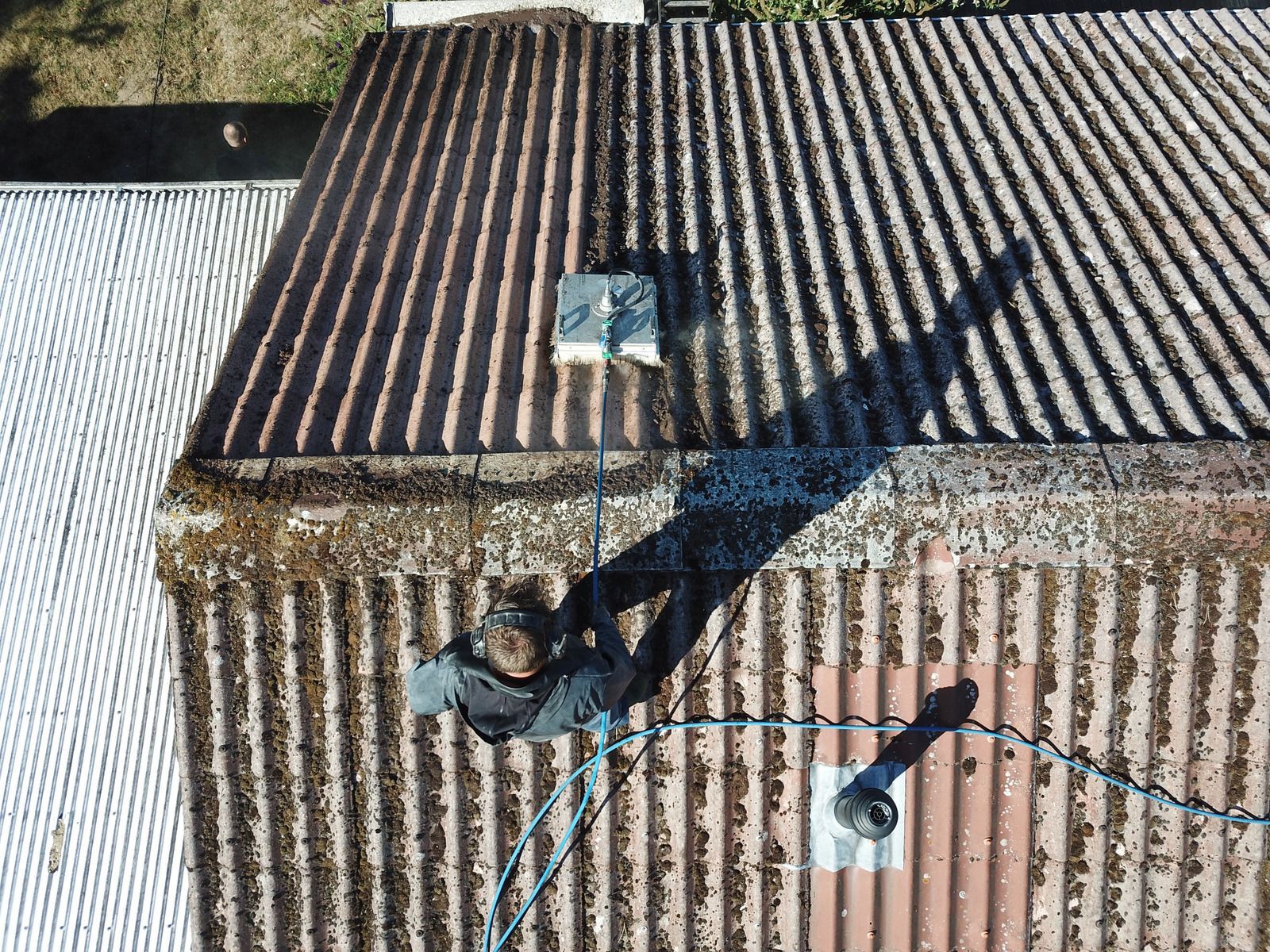
Waiting until moss is thick enough to see from the street means the growth has usually already worked its way under the tile edges and into the nibs that hold each tile in place. At that stage, cleaning becomes more about damage limitation than routine maintenance.
A fixed schedule flips that around. Cleaning on a set cycle, rather than only when the roof looks obviously bad, catches the early, loose moss and the first traces of algae before they bind themselves to the tile surface, which is a far gentler and more predictable job for both the tiles and the person doing the cleaning.
3. Concrete Tiles and Slough's 1930s Semis: A Faster Moss Cycle
Slough's housing stock owes a great deal to the Slough Trading Estate, which grew rapidly after being established in 1920 on land that had formed part of Cippenham Court Farm. The estate drew workers into the town through the 1920s and 1930s, and much of the semi-detached housing that still lines streets in Langley, Cippenham and further out was built during that same boom to house them.
That generation of housing was overwhelmingly finished in concrete roof tiles rather than the clay or slate used on older buildings. Concrete is more porous and slightly rougher in texture than clay or slate, which gives moss spores and algae something to grip. Our article on Slough's 1930s semis and concrete tiles goes into more depth on why this housing stock in particular tends to regrow moss faster than expected, and why the cleaning interval on these roofs often needs to sit at the shorter end of the range.
4. Thames Valley Damp and Why It Speeds Up Regrowth
Slough sits in the Thames Valley, a part of the country that is comparatively low-lying and holds onto moisture in the air even when rainfall totals themselves are not exceptional for the UK. Regional weather data puts Slough's average annual rainfall at somewhere around 650 to 700mm, spread fairly evenly through the year with autumn and early winter typically the wettest stretch.
It is that combination of frequent light rain, morning mist and long shaded periods on north-facing pitches, rather than any single downpour, that keeps roof surfaces damp for long enough for algae like Gloeocapsa and moss spores to establish. We cover the mechanics of this in why roofs across Slough turn green, and it is a large part of why a fixed cleaning schedule works better here than simply waiting for a roof to look dirty.
5. Signs Your Roof Is Overdue for a Clean
Between scheduled cleans, it helps to know what to look out for. A handful of visual cues tend to show up well before a roof looks obviously neglected, and catching them early keeps the eventual clean simpler.
- Green or black streaking running down from the ridge or valley, particularly on north-facing pitches that get less direct sun.
- Moss cushions at tile edges , especially where tiles overlap or sit under overhanging branches.
- Granules or debris in the gutter after rain, which often means tile surfaces are breaking down under trapped growth.
- Damp patches on ceilings below valleys or chimneys, which can point to water being held against the roof by moss rather than running off.
- Slower drainage after rain , where water visibly pools or drips longer than it used to from the same downpipe.
6. Seasonal Timing: Best Months to Schedule a Clean in Slough
Late spring through early autumn tends to be the most practical window for cleaning in Slough, once the worst of the wet, low-light winter months have passed and the roof has had a chance to dry out properly between showers. Our detailed guide, when should you clean your roof, sets out the seasonal reasoning in full.
Booking a clean before autumn also means gutters and downpipes are cleared ahead of the wettest part of the year, rather than heading into winter already partly blocked by moss and leaf debris that has come loose from the roof above.
7. How Trees, Shade and Aspect Change the Schedule
Two houses on the same street can need very different schedules. A semi in Britwell backing onto mature trees, or a home in Cippenham near the green belt with overhanging branches, will collect organic debris and stay shaded for longer than an open, south-facing roof elsewhere in the borough.
Aspect matters just as much as tree cover. A north-facing pitch that rarely sees direct sun through the winter months will dry out far more slowly after rain than a south-facing one, and that extra drying time is exactly what moss and algae need to take hold. Homes with both heavy shade and a north-facing slope are usually the ones that need a clean closer to the two-year mark rather than the four.
8. Gutters and Roofs Work as a System
A roof clean that ignores the gutters only solves half the problem. Moss and granules dislodged during cleaning, along with leaves and general debris, tend to collect in the guttering, and on Slough's pebbledash and rendered 1930s homes a blocked gutter can send water down the wall face rather than through the downpipe. Our piece on why gutter cleaning matters more on pebbledash and rendered homes explains why this matters more here than on plain brick elevations.
For that reason, gutter clearing is best treated as part of the same visit as a roof clean, not a separate job scheduled months apart. Checking both together keeps the whole system, tiles, valleys, gutters and downpipes, working as intended.
9. Building a Simple Year-Round Maintenance Calendar
A workable calendar does not need to be complicated. A visual check from ground level each spring and autumn, a professional clean every two to four years depending on the factors above, and a gutter check before and after the wettest months covers most of what a Slough roof needs.
Keeping a simple record of when each clean happened, and what the roof looked like at the time, makes it far easier to judge whether your particular roof is drifting towards the two-year end of the schedule or comfortably sitting nearer four.
Frequently Asked Questions
How often should a Slough roof really be cleaned?
Most homes do well on a two to four year cycle, with shaded, north-facing concrete-tiled roofs needing it more often than sunny, well-drained ones.
Does the age of my house change how often it needs cleaning?
Yes. Older 1930s semis with concrete tiles generally need attention more often than newer roofs or traditional slate, because of how the tile surface holds moisture.
What does roof cleaning in Slough typically cost?
Costs vary with roof size, pitch, access and how much growth has built up, so it is worth asking for a site-specific quote rather than relying on a generic figure, and treating any online price as a general guide only.
Can I just clean the roof myself to save money?
You can remove light surface debris carefully from ground level, but climbing onto tiles risks cracking them and risks a fall, so most homeowners prefer to have a professional assess the roof first.
Will cleaning my roof stop moss coming back completely?
No single clean prevents regrowth forever, but a proper clean combined with a sensible follow-up schedule slows regrowth considerably compared with leaving the roof untouched.
Is it better to clean the roof and gutters at the same time?
Yes, in most cases. Debris dislodged from the roof usually ends up in the gutter, so doing both together avoids a second visit and keeps water draining properly straight away.
Ready for a roof that matches your schedule, not the other way around?
Ben's Roof Cleaning has over 15 years of experience cleaning roofs and gutters across Slough and Berkshire, from Langley and Cippenham to Britwell and Upton. Get in touch or call 0175 330 6645
for a free, no-obligation quote.
A Schedule Beats a Guess Every Time
Slough's mix of concrete-tiled 1930s semis, Thames Valley damp and shaded gardens means moss and algae have every advantage if a roof is left to its own devices. Building a simple cleaning schedule around your specific roof, its tile type, its aspect and the trees around it, does more to protect it long term than waiting for problems to appear. A roof cleaned on a sensible cycle stays in better condition, drains properly through every season, and costs less to look after over its lifetime than one left to chance.